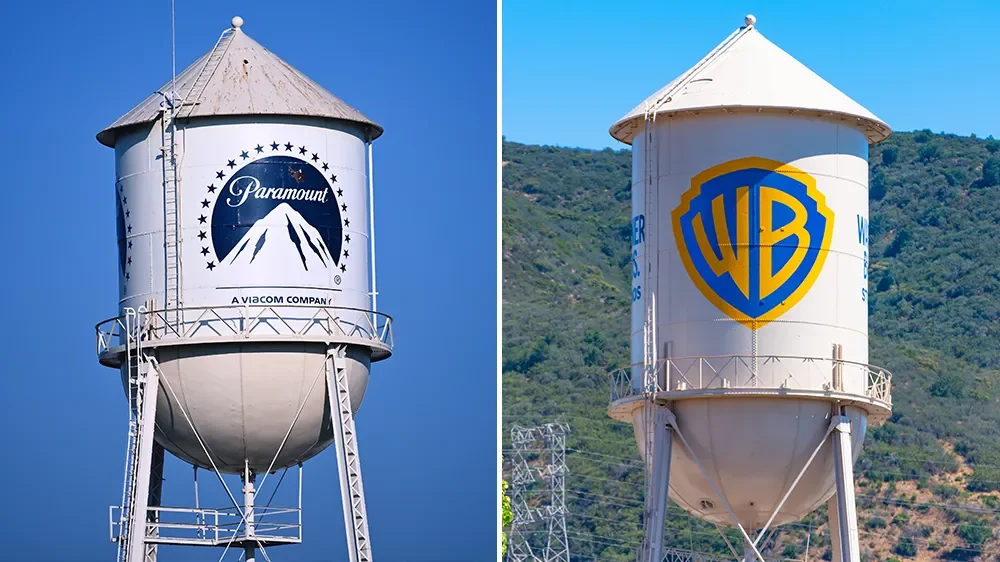
Why Paramount Is the Better Outcome for Warner Bros. Discovery Than Netflix Ever Was
At this point, the debate is largely hypothetical.
Paramount is actively working through the FCC and other federal approval processes to acquire Warner Bros. Discovery.
The deal is moving through regulatory review, executives are publicly discussing integration plans, and the industry is already looking ahead to what a combined Paramount-Warner Bros. future could look like.
Netflix has effectively been out of the conversation for months.
Despite that reality, there are still some people insisting that Netflix would have been the better option.
And while Netflix did convinced me months ago… I have come back around and I disagree with the notion Netflix was the better option.
First, I want to establish something important, the ideal outcome for many would have been Warner Bros. Discovery remaining independent. A company with the history and legacy of Warner Bros. deserves to stand on its own whenever possible.
But since the sale was inevitable, the question becomes simple,
Who is more likely to preserve what makes Warner Bros. valuable?
Not so shockingly, the answer isn’t and never was Netflix.
That’s not a knock against Netflix. The company revolutionized entertainment and remains the king of streaming. But Netflix’s priorities have always been clear. Their primary goal is growing and retaining subscribers. Movies, television shows, and original content all serve that larger mission.
Even Netflix Film Chairman Dan Lin has made it clear that Netflix remains committed to its streaming first strategy. That’s how the company operates, and frankly, it has worked incredibly well for them.
The problem is that Warner Bros. isn’t just content.
Warner Bros. is one of the pillars of Hollywood.
It’s a studio built on theatrical filmmaking. The company has spent decades creating franchises designed for movie theaters. DC, Harry Potter, The Lord of the Rings, Godzilla x Kong, Dune and countless other properties weren’t built around streaming algorithms.
They were built around the theatrical experience.
That’s where Paramount’s vision becomes far more appealing.
Rather than reducing theatrical output, Paramount has discussed plans that would result in approximately 30 theatrical releases per year from the combined company, split between the Paramount and Warner Bros. brands. They’ve also expressed support for maintaining meaningful theatrical windows before films arrive on streaming.
No denying that is a huge difference in philosophy.
A streaming company views movies as a way to drive subscriptions.
While a movie studio views movies as the product.
Those may sound similar, but the execution leads to very different business decisions.
More theatrical releases means more productions. More productions mean more jobs. Writers, directors, actors, editors, visual effects artists, set builders, marketing teams, theater employees and countless others all benefit when studios are actively making and releasing films.
Make no mistake though, No merger guarantees job security. Consolidation always carries risks.
But if you’re comparing visions for the future, one company is talking about expanding theatrical output while the other has spent years building a streaming first ecosystem.
That’s why I find the “Netflix would’ve been better” argument difficult to understand.
Better for who?
For Netflix shareholders? Maybe.
For streaming subscribers? Possibly.
But for the broader film industry? For movie theaters? For the thousands of people whose livelihoods depend on theatrical filmmaking?
That’s a much harder case to make.
There’s also a bigger principle at play.
Regardless of your politics, government regulators should be focused on legitimate competition concerns and consumer harm, not trying to micromanage business decisions from Washington.
Their job is to determine whether a deal creates unfair market conditions. It isn’t to decide which entertainment company they personally prefer.
If Paramount’s acquisition of Warner Bros. Discovery passes regulatory review, it should be judged on whether it benefits consumers and preserves competition… not on speculative fears about what might happen years down the road.
And based on what Paramount has publicly outlined so far, the company isn’t proposing a future that shrinks Hollywood.
It’s proposing one that continues investing in theatrical films, television and streaming simultaneously.
Will everything go perfectly? Of course not.
Every merger comes with challenges.
But if Warner Bros. Discovery had to be sold, Paramount appears far more interested in preserving the traditional studio model than Netflix ever was.
And for an industry that is still fighting to strengthen moviegoing after years of disruption, that’s probably the better outcome.