

The Superhero Box Office Boom Is Over, And Fans Need To Accept That
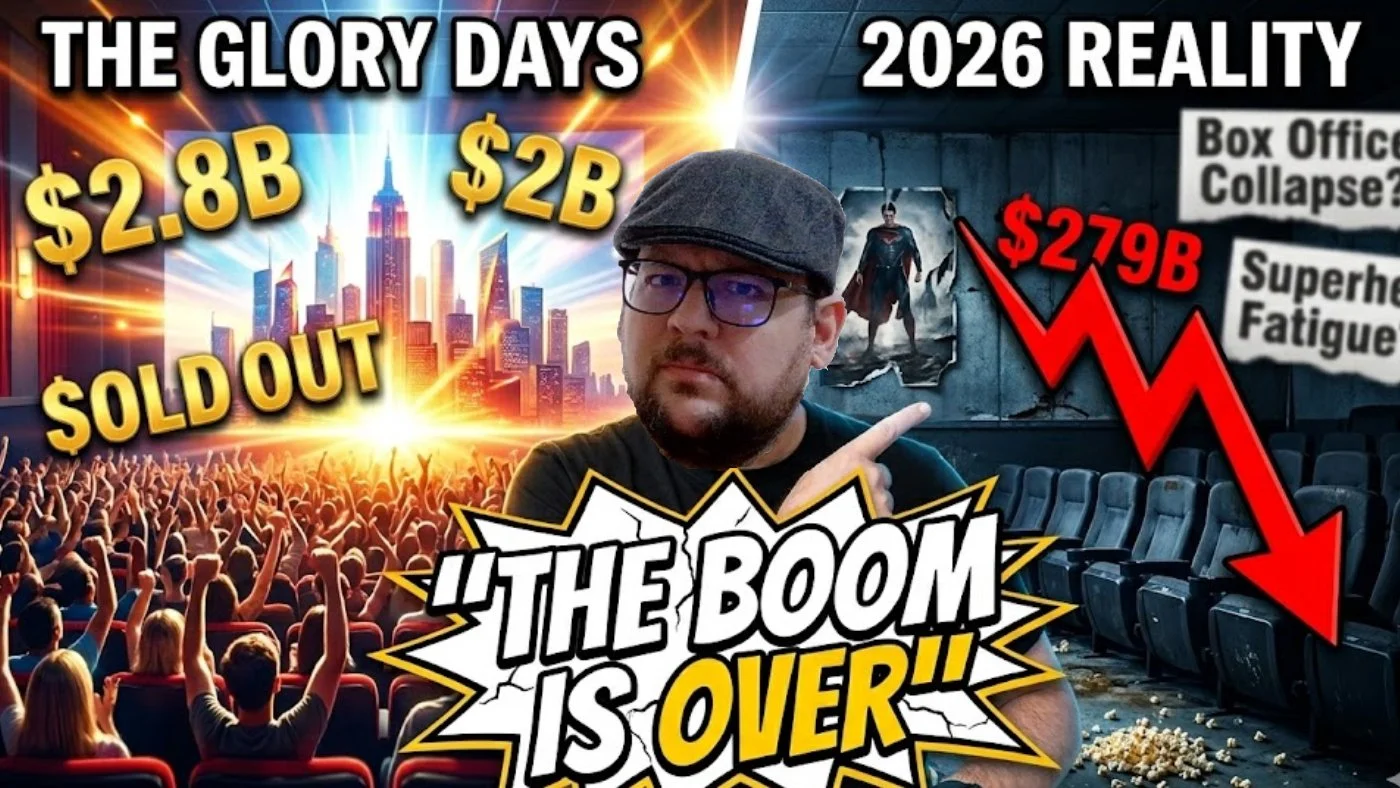
There was a time when putting a cape on the poster felt like printing money.
For most of the 2010s, superhero movies were not just successful. They were the center of Hollywood. Marvel was operating like a machine. DC, even with all its chaos, still had massive event level interest.
You see, audiences showed up because superhero movies felt big, connected, important and unavoidable.
Some fail to realize that this era peaked in 2018 and 2019.
Avengers: Infinity War made over $2 billion worldwide. Avengers: Endgame went even bigger with nearly $2.8 billion worldwide, becoming one of the highest grossing movies ever. Domestically, Endgame made $858 million, while Black Panther made $700 million in North America alone.
Despite it’s struggles DC had its own giants too.
Aquaman crossed $1.1 billion worldwide in 2018, The Dark Knight Rises made over $1 billion in 2012, and even the controversial Batman v Superman in 2016 still pulled in a massive global haul.
The genre was so hot that even movies with mixed reception could still perform like cultural events.
However, that was then.
Today, in 2026, the expectation should not be that every superhero movie is chasing 2019 numbers. That world is long gone.
Just look at the recent lows.
The Marvels finished with only $206 million worldwide. Shazam! Fury of the Gods landed around $134 million worldwide. Blue Beetle made about $131 million worldwide. Madame Web barely crossed $100 million worldwide.
Those weren’t just dips in the market… It was/is a market correction with a cape on.
If you are wondering what happened, well the truth is actually really simple.
The audience changed.
The theatrical business changed.
Streaming changed habits.
COVID accelerated those habits.
Ticket prices went up.
Families became more selective.
And after years of cinematic universes, multiverse homework, Disney Plus spin offs, post credit teases and corporate universe building, casual audiences stopped treating every superhero release like mandatory viewing.
Don’t confuse what I am saying with the idea that superhero movies are dead. That is just lazy analysis.
Spider-Man: No Way Home still went nuclear with over $800 million domestic and nearly $2 billion worldwide. Deadpool & Wolverine proved there is still major appetite when the hook is strong, the characters are beloved, and the movie feels like an actual event. Batman will always have a higher ceiling. Spider-Man will always have a higher ceiling. Avengers will always have a higher ceiling.
What you need to understand though is that those are not the standard… Those are the exceptions.
Studios in Hollywood got drunk on the exception and started treating it like the rule.
For years, the mindset was simple… connect everything, tease the next thing, stack the cameos, sell the brand and audiences will show up.
That worked when the MCU was building toward something. It worked when there was novelty. It worked when fans believed the next chapter mattered.
But then it didn’t
You see, the early 2020s happened, and a lot of studios seemed to confuse representation, messaging and franchise obligation for storytelling.
To be clear, inclusion is not the problem. Bad storytelling is the problem. Audiences do not reject diversity when the movie is good. Black Panther proved that. Spider-Verse proved that. The issue is when the story feels secondary to a corporate checklist or a lecture.
Even Disney’s Bob Iger admitted the company needed to refocus on entertainment first rather than letting messaging become the objective. He also said Disney would reduce output and focus more on quality, especially with Marvel.
And that is the lesson everyone learned during this time.
We are in the next era of superhero films and the expectation is no longer “watch this because it connects to the next five things.” It has to be built on “watch this because it is a damn good movie.”
Story over connection, character over cameos, purpose over homework.
The 2010s were the superhero genre’s heyday. That was the golden age of the comic book movie machine. But 2026 and forward is a different battlefield.
A $600 million superhero movie today may be a real win depending on budget, marketing, audience reception and long term franchise value. Not everything needs to hit a billion to matter.
The genre is not dead but the free ride is.
And when you really think about it, that might be the best thing that could happen to it.
