

The Forgotten Controversy of Underworld
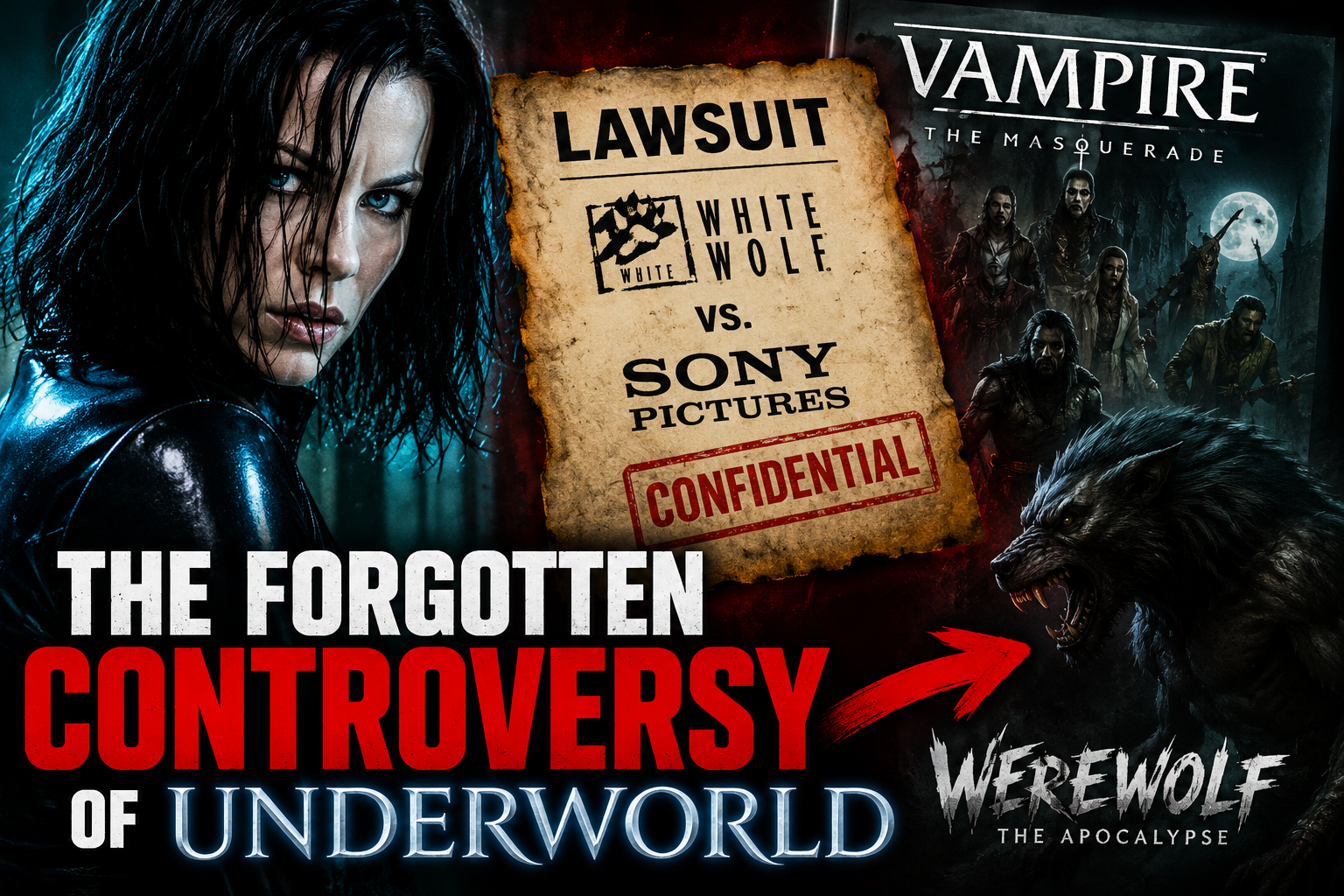
When most people think of Underworld, they think of Kate Beckinsale in black leather, vampires wielding automatic weapons and a centuries old war between bloodsuckers and Lycans.
The franchise became one of the defining action/horror properties of the 2000s and spawned multiple sequels, prequels and even a dedicated fanbase.
However, what many fans may not realize is that Underworld found itself at the center of a legal dispute shortly before the film's release in 2003.
At the time, White Wolf Publishing, the company behind the popular World of Darkness tabletop roleplaying games, filed a lawsuit against Sony Pictures, Screen Gems and Lakeshore Entertainment.
Author Nancy A. Collins also joined the suit.
Their argument was that Underworld shared substantial similarities with elements found in White Wolf's games, particularly Vampire: The Masquerade and Werewolf: The Apocalypse, as well as Collins' story Love of Monsters.
For those unfamiliar with World of Darkness, the tabletop setting was one of the most influential horror RPG universes of the 1990s.
Rather than portraying vampires and werewolves as simple movie monsters, White Wolf built an intricate modern gothic world filled with secret societies, ancient bloodlines, political intrigue and supernatural wars hidden beneath the surface of everyday life.
To put it simply, think Dungeons & Dragons, but set in a dark modern world filled with vampires, werewolves, supernatural creatures and occult conspiracies.
When Underworld arrived in theaters, some fans immediately noticed similarities between the film's setting and the themes that had long been present within World of Darkness. The movie centered on an ancient conflict between vampires and Lycans, featured powerful vampire elders controlling hidden societies, explored centuries old bloodlines, and embraced a dark gothic aesthetic that felt familiar to many tabletop players.
That familiarity became the foundation of White Wolf's lawsuit.
It's important to note that ideas such as vampires, werewolves, secret societies, and supernatural conflicts are not unique to any one creator. These concepts have existed in mythology and fiction for generations.
The legal dispute was never about ownership of vampires or werewolves themselves. Instead, the disagreement focused on whether the specific combination of themes, worldbuilding elements and narrative concepts in Underworld resembled White Wolf's intellectual property closely enough to constitute infringement.
The case generated attention within gaming and horror circles, but it never reached a definitive public conclusion. Rather than proceeding to a final courtroom verdict, the parties eventually reached a confidential settlement. As a result, there was never a ruling determining whether Underworld had crossed any legal lines.
That outcome left many questions unanswered.
Without a public verdict, fans were left to draw their own conclusions regarding the similarities between the film and White Wolf's games. Some viewed the overlap as little more than genre conventions common to gothic horror. Others believed the resemblance was too significant to ignore. More than twenty years later, opinions remain divided.
What is perhaps most interesting is how this chapter of Underworld's history has largely faded from public memory. The franchise went on to become a commercial success, earning hundreds of millions of dollars worldwide and establishing itself as a recognizable name in supernatural cinema. Meanwhile, the lawsuit that once surrounded the film has become little more than a footnote for many moviegoers.
Yet it remains an intriguing piece of genre history.
Whether one believes the similarities were coincidence, inspiration, or something in between, the dispute highlights how influential tabletop gaming had become by the early 2000s.
Long before Hollywood embraced comic book universes and shared franchises, companies like White Wolf were already building expansive fictional worlds filled with deep lore, complex mythology and passionate fan communities.
In many ways, the controversy surrounding Underworld serves as a reminder of that influence. It represents a moment when one of the most successful supernatural action films of its era found itself compared to one of the most beloved horror gaming universes ever created.
And because the case ended behind closed doors, the full story may never be known.
