

Movie Subscriptions Are a Great Deal. That Might Be the Problem.
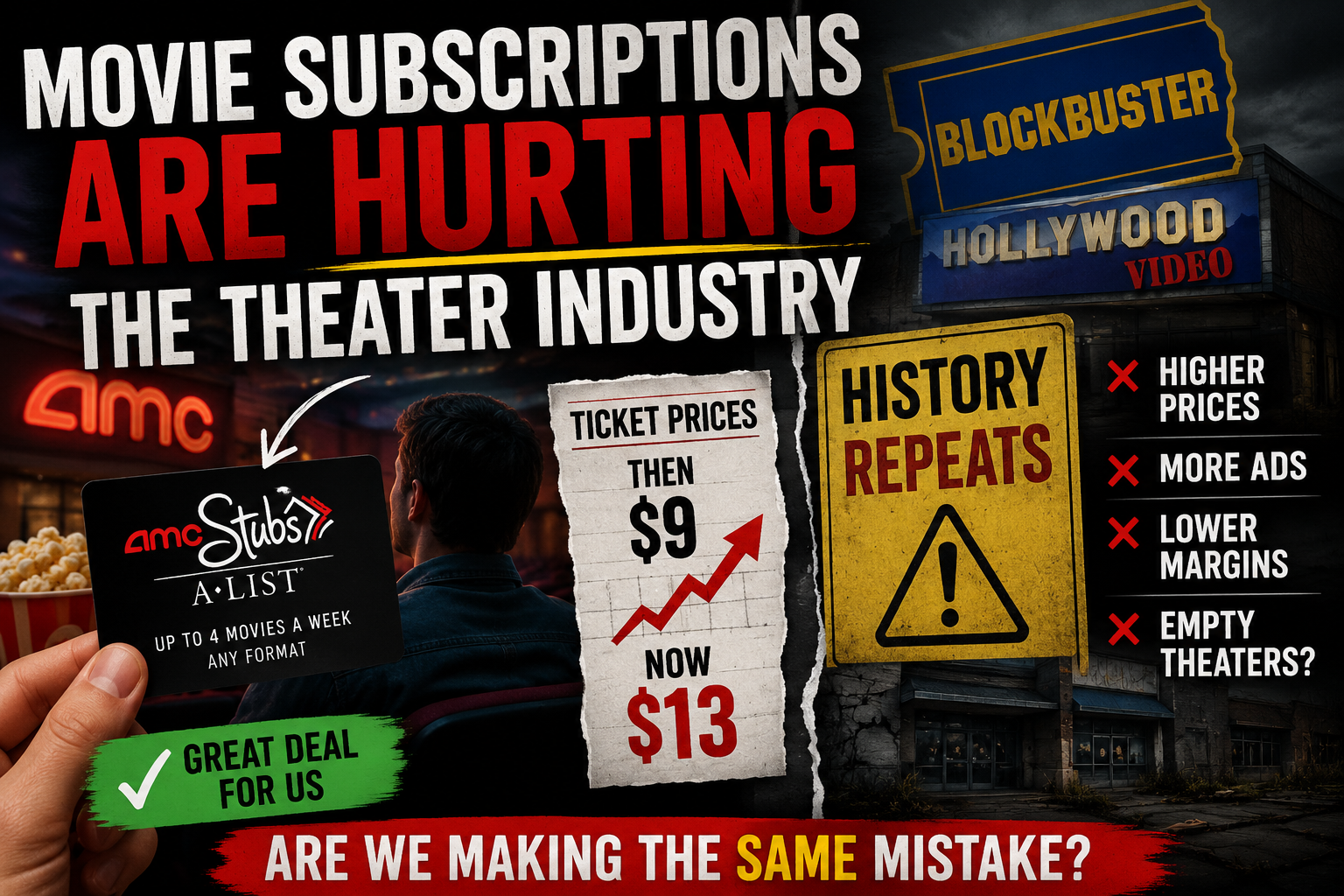
Movie theater subscriptions are one of the best deals left in entertainment.
That is also why they might be a problem.
Programs like AMC Stubs A-List give regular moviegoers an incredible bargain. AMC currently advertises A-List as allowing members to see up to four movies every week, in any format, including IMAX and Dolby Cinema. That is great for the consumer. No argument there.
I’m a big user and lover of AMC A-List.
But loving something does not mean we should ignore what it may be doing to the larger theatrical business.
Before these subscription models became a major part of the moviegoing conversation, the average U.S. movie ticket was much lower. In 2017, the average ticket price was about $8.97, and in 2019 it was around $9.16. By 2022, NATO estimated the average ticket price had climbed to $10.53, and more recent estimates place the 2024 average somewhere between roughly $11 and $13 depending on the source and whether premium formats are included.
Now, to be fair, subscriptions are not the only reason ticket prices went up. Inflation matters. Labor costs matter. Premium screens matter. The post-pandemic box office decline matters. But subscriptions absolutely changed the value equation.
AMC A-List originally launched in 2018 at $19.95 per month for up to three movies per week. In 2025, AMC raised the price and expanded the plan to four movies per week. Depending on where you live, that means a customer can pay around the cost of two regular tickets and potentially watch more than a dozen movies in a month.
That sounds amazing.
But from the theater’s side, the math gets complicated fast.
Theaters do not keep every dollar from a ticket sale. AMC itself states in SEC filings that it licenses films from distributors on a film by film and theater by theater basis, and that “film exhibition costs” are based on a share of admissions revenue.
In 2024, AMC reported film exhibition costs equal to 48.4% of admissions revenue.
To simplify that for you, when someone buys a movie ticket, a major piece of that money goes back to the studio or distributor.
So, when someone uses a subscription pass the theater still has to account for that admission. The studio still expects its share based on the terms of the licensing agreement. The theater then has to make the subscription model work through volume, unused memberships, concessions, premium pricing, advertising and higher spending from people who visit more often.
This is why the real business model of movie theaters is not just “sell tickets.”
It is “get bodies in seats, sell popcorn, sell drinks, sell ads and hope enough subscribers do not fully max out the plan.”
And here is where the warning signs begin to flash.
We have seen a version of this movie before.
In the 2000s, Blockbuster tried to fight Netflix by leaning into subscription rentals. Blockbuster Total Access allowed subscribers to rent DVDs by mail and exchange them in stores, with plans such as the popular three out unlimited movie plan priced at $17.99 per month in 2007. But heavy users created pressure on the model. By late 2007, Blockbuster raised prices on Total Access plans, with one premium plan reportedly jumping from $24.99 to $34.99 per month.
Why? Because the people who used the plan the most were getting the most value while the company carried the cost.
Hollywood Video had a similar program with its Movie Value Pass/MVP model. Some versions reportedly let customers keep multiple movies out at a time for around $25 to $30 per month. Again, great for frequent renters. Dangerous for the business if too many people use it aggressively.
The issue was not just that customers were paying less per rental. It was that physical copies stayed out of circulation. A DVD sitting in one subscriber’s house for five days could not be rented by another customer paying full price.
Movie theaters have a different problem, but the logic rhymes.
A seat used by an A-List subscriber is not necessarily bad. Empty seats make no money. But if more and more regular moviegoers shift from full-price tickets to subscription access, theaters have to recover revenue somewhere else.
That “somewhere else” is obvious.
Higher ticket prices for non-subscribers.
More expensive concessions.
More premium format upselling.
More loyalty-program pressure.
And yes, more ads before the movie.
This result is a strange contradiction.
Subscription plans can be great at making the moviegoing experience feel cheaper… Especially for frequent customers. However, it does make the overall theater experience more expensive and more annoying for everyone else.
You can now see how this is not a healthy long term balance.
Theaters are already under pressure.
Domestic box office remains below pre-pandemic levels in attendance, even when revenue looks better because prices are higher. AMC has also emphasized record revenue per patron, including food and beverage growth, which shows just how important squeezing more money out of each customer has become.
That is the danger.
The theater industry cannot survive by training its best customers to stop thinking of movies as individual purchases while simultaneously punishing casual customers with higher prices and longer ad blocks.
Again, this does not mean AMC A-List is bad for consumers. It is a fantastic deal.
But sometimes a fantastic deal for the customer is a warning sign for the business.
Blockbuster learned that lesson the hard way. It chased subscriptions, discounts, and convenience after Netflix had already changed consumer expectations. By the time the company tried to correct course, the audience had moved on.
Theaters are not dead. They still offer something streaming cannot truly replace. A packed room. A giant screen. Premium sound. A shared experience.
But if theater chains keep copying the same subscription logic that helped weaken brick-and-mortar rental stores, they may end up creating the same problem.
Customers will love the deal.
Right up until the business can no longer afford to offer it.
